
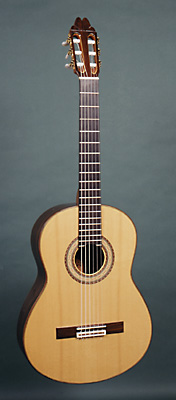
Welcome to the fantastic world of classical guitar. In this site, you will find classical guitar pieces, in midi format, for one and more guitars: actually 5641 MIDI files from 96 composers. Information on how to create midi files and a tutorial on the tablature notation system is presented. Images of ancient guitars provided.
|
|
I need to make sure the language is formal enough for an article but still accessible. Avoid jargon, but maintain a scholarly tone. Since the user requested it in Japanese, the article should be written in Japanese, using appropriate terminology and structure.
First, I need to understand the original Japanese title. "Yuusha" means "hero," and the phrase seems to be a common trope in light novels, anime, and games where a protagonist is betrayed but persists. The user might be looking for an analysis of this theme, its relevance in media, or maybe how it's implemented in a specific story.
Next, I should consider the user's possible intent. They might want an academic-style article or a more casual analysis. Since they specified "raw install," which sounds tech-related, perhaps they are a fan of role-playing games (RPGs) where installing a game (raw install) without mods or add-ons could represent the purest form of the hero's struggle. Alternatively, "raw install" might be a mistranslation or a mix-up with terms from another context, like game modding or software installation. But given the context, focusing on the narrative theme is more likely.
Potential examples could be works like "The Heroic Legend of Arslan," "Fullmetal Alchemist: Brotherhood," or "Naruto," where the protagonist faces betrayal but continues. I should highlight how these stories use the betrayal to develop the hero's character, making their perseverance more compelling.
I need to outline the article structure. Start with an introduction about the common theme in stories, then discuss its emotional impact on audiences, analyze the character development, and maybe provide examples from popular works. Also, address why this trope resonates with people. Including elements like trust, betrayal, resilience, and redemption would be key points.
Composers are grouped in 6 pages: A-B;
C-F;
G-L;
M-O;
P-R; S-Z .
J.-S.
Bach , A.
Barrios Mangore , N. Coste
, M. Giuliani , F.
Sor and F.
Tarrega are on their own page
Click here
to listen to 20 great MIDI from the site
Composers in alphabetical order
I need to make sure the language is formal enough for an article but still accessible. Avoid jargon, but maintain a scholarly tone. Since the user requested it in Japanese, the article should be written in Japanese, using appropriate terminology and structure.
First, I need to understand the original Japanese title. "Yuusha" means "hero," and the phrase seems to be a common trope in light novels, anime, and games where a protagonist is betrayed but persists. The user might be looking for an analysis of this theme, its relevance in media, or maybe how it's implemented in a specific story. I need to make sure the language is
Next, I should consider the user's possible intent. They might want an academic-style article or a more casual analysis. Since they specified "raw install," which sounds tech-related, perhaps they are a fan of role-playing games (RPGs) where installing a game (raw install) without mods or add-ons could represent the purest form of the hero's struggle. Alternatively, "raw install" might be a mistranslation or a mix-up with terms from another context, like game modding or software installation. But given the context, focusing on the narrative theme is more likely. First, I need to understand the original Japanese title
Potential examples could be works like "The Heroic Legend of Arslan," "Fullmetal Alchemist: Brotherhood," or "Naruto," where the protagonist faces betrayal but continues. I should highlight how these stories use the betrayal to develop the hero's character, making their perseverance more compelling. Next, I should consider the user's possible intent
I need to outline the article structure. Start with an introduction about the common theme in stories, then discuss its emotional impact on audiences, analyze the character development, and maybe provide examples from popular works. Also, address why this trope resonates with people. Including elements like trust, betrayal, resilience, and redemption would be key points.
Note to MIDI sequence contributors
Your submissions are welcomed.
Please send them by e-mail (end of text). Pieces
should bear the composer's name and be properly identified.(ex.: J.K. Mertz (1806-1856) Nocturne
Op.4 No.2.). The submissions
should bear information on the transcriber or arranger when available. The submitter's name
will appear beside the accepted submission.
This site exists primarily to showcase pieces written for the classical
guitar. Established and recognized transcriptions and arrangements (e.g.,
Tarrega, Segovia,..) of pieces written by non-guitar composers will also be given
high priority.
New compositions for the classical guitar are also welcomed. New
compositions that meet quality guidelines will be added to the site. For
new contributors, it would be appreciated if you would also submit several
pieces by known composers in addition to your own compositions. This will
help to expand the repertoire of established works for the classical guitar in
addition to expanding the repertoire of new music.
Last update: March 8 2026
Copyright François Faucher 1998-2025
 G.F.Handel's Sonata 2. Allegro
3.Adagio HWV368
G.F.Handel's Sonata 2. Allegro
3.Adagio HWV368