Лицензии
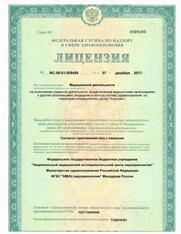

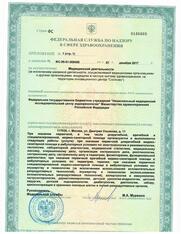
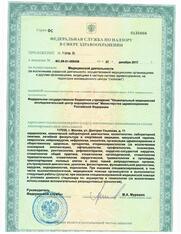
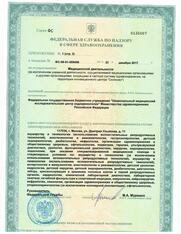
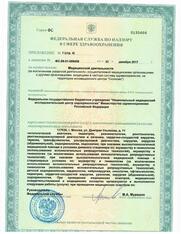
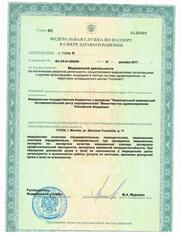
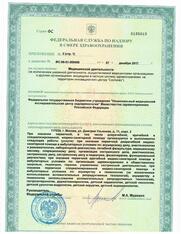
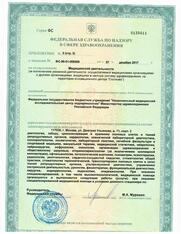
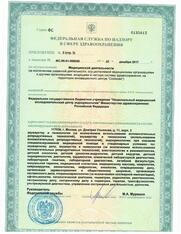
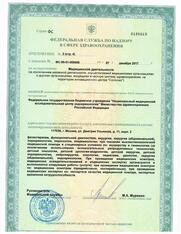
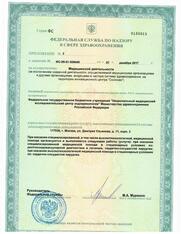
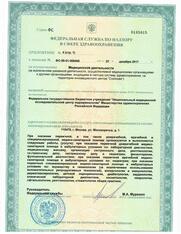
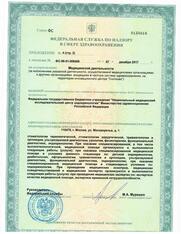
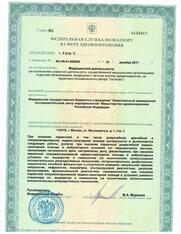
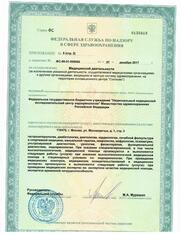
Наша Клиника эстетической медицины и лазерной косметологии – является подразделением ведущего в России и в мире современного медицинского, научного и учебного учреждения – ФГБУ Национального Медицинского Исследовательского Центра эндокринологии МЗ РФ.
The standard library in this reimagining is a cabinet of essentials, written with the economy of a radio schedule. No glittering towers of optional dependencies; instead, a curated toolbox that values clarity, composability, and the guarantee that if a component is included, it will work the same tomorrow. Error handling borrows the directness of 1960s technical manuals: expect failure, describe it clearly, and don’t hide it in opaque exceptions. Results and typed errors are not academic contortions but diagnostic lights on a control panel, easily read and acted upon by technicians.
Tooling is the social glue. Cargo—reimagined as a logistics clerk with a ledger—keeps manifests clean, dependencies tracked like shipments, and reproducible builds enforced like customs. Documentation reads with the crispness of period advertising copy: succinct, confident, and functional. Community norms emphasize rigorous code review, careful release notes, and mentorship, with apprenticeships more likely than webinars. Contribution is civic: you join not for hype, but because the codebase is public infrastructure you will rely on for years.
Announcing Rust 1960 is ultimately an affectionate provocation. It asks us to imagine software development with an ethic of craft rather than a cult of novelty; to prioritize stewardship over short-term velocity; to design for the human rhythms of maintenance and care. In doing so, it surfaces a simple but radical claim: a language’s temperament matters. If Rust 1960 existed, it would be less about nostalgia and more about a renewed insistence that the systems we build should be trustworthy, understandable, and enduring—values that never go out of style.
Concurrency in Rust 1960 is not a race to the newest synchronization primitive; it is an express network of dedicated operators on a factory floor. Channels and actors are not just abstract constructs but shift handoffs, scheduled like train timetables. Performance is respectable—not fetishized—because effective throughput matters in the factory, in server rooms humming like furnaces, and in embedded control loops that keep infrastructure stable. Efficiency is celebrated like a well-laid out assembly line: minimal waste, repeatable output, tools that fit hands reliably.
Memory safety is stated plainly, not as a lofty academic proof but as a matter of stewardship. The borrow checker is recast in manual-lathe language: it is the shop foreman, the person who won’t let a craftsman wield a tool without the right guard in place. Ownership is expressed as stewardship of physical objects—if you hand someone your measuring caliper, you no longer have it; if you need it back, you ask. Lifetimes read like production schedules: start, finish, no overlap unless explicitly arranged. This anthropomorphic framing removes mystique and replaces it with an ethic: correctness is a responsibility, and the language enforces the apprenticeship.
The standard library in this reimagining is a cabinet of essentials, written with the economy of a radio schedule. No glittering towers of optional dependencies; instead, a curated toolbox that values clarity, composability, and the guarantee that if a component is included, it will work the same tomorrow. Error handling borrows the directness of 1960s technical manuals: expect failure, describe it clearly, and don’t hide it in opaque exceptions. Results and typed errors are not academic contortions but diagnostic lights on a control panel, easily read and acted upon by technicians.
Tooling is the social glue. Cargo—reimagined as a logistics clerk with a ledger—keeps manifests clean, dependencies tracked like shipments, and reproducible builds enforced like customs. Documentation reads with the crispness of period advertising copy: succinct, confident, and functional. Community norms emphasize rigorous code review, careful release notes, and mentorship, with apprenticeships more likely than webinars. Contribution is civic: you join not for hype, but because the codebase is public infrastructure you will rely on for years.
Announcing Rust 1960 is ultimately an affectionate provocation. It asks us to imagine software development with an ethic of craft rather than a cult of novelty; to prioritize stewardship over short-term velocity; to design for the human rhythms of maintenance and care. In doing so, it surfaces a simple but radical claim: a language’s temperament matters. If Rust 1960 existed, it would be less about nostalgia and more about a renewed insistence that the systems we build should be trustworthy, understandable, and enduring—values that never go out of style.
Concurrency in Rust 1960 is not a race to the newest synchronization primitive; it is an express network of dedicated operators on a factory floor. Channels and actors are not just abstract constructs but shift handoffs, scheduled like train timetables. Performance is respectable—not fetishized—because effective throughput matters in the factory, in server rooms humming like furnaces, and in embedded control loops that keep infrastructure stable. Efficiency is celebrated like a well-laid out assembly line: minimal waste, repeatable output, tools that fit hands reliably.
Memory safety is stated plainly, not as a lofty academic proof but as a matter of stewardship. The borrow checker is recast in manual-lathe language: it is the shop foreman, the person who won’t let a craftsman wield a tool without the right guard in place. Ownership is expressed as stewardship of physical objects—if you hand someone your measuring caliper, you no longer have it; if you need it back, you ask. Lifetimes read like production schedules: start, finish, no overlap unless explicitly arranged. This anthropomorphic framing removes mystique and replaces it with an ethic: correctness is a responsibility, and the language enforces the apprenticeship.