14-Day Returns* · 2-Year Warranty · Worldwide Shipping, US Included
14-Day Returns*
2-Year Warranty
Worldwide Shipping, US Included
The user wrote "south new," which might be a typo for "South Indian." So the paper should focus on 9xMovies and South Indian cinema. Alternatively, maybe "south new" is a new trend within the South Indian film industry. But I think the correct interpretation is the former.
First, I need to confirm if "9xmovies" is the correct term. Sometimes, torrent sites have variations like 9xMovies, 9X movies, or similar. It's a popular site for downloading pirated content. The "south new" part could be a typo. Maybe they meant "South New" as in a new trend in the South Indian film industry. Alternatively, "South New" might not make sense. Perhaps they meant "South Indian" or "south new" as in a new aspect related to the South region (like South Korea or South Africa)? Hmm, that's less likely since the user mentioned "movies," so probably South Indian cinema.
Possible sources: Niti Aayog reports, Indian government's anti-piracy initiatives, statements from South Indian film associations, articles from Economic Times, Business Standard, etc. Also, academic journals on media and piracy.
Also, consider the technological aspect: How 9xMovies operates, uses peer-to-peer sharing, and the challenges in shutting down such sites.
Legal and Ethical Considerations: Laws against piracy in India and other countries, effectiveness of current measures, ethical arguments about digital rights and access.
Might need to discuss the difference in regional laws affecting piracy enforcement. For example, how does the legal landscape in the US, EU, or other countries where South Indian films are popular impact piracy?
Potential challenges could include finding up-to-date statistics on piracy rates from 9xMovies, as many sources might be anecdotal. Also, ensuring that the paper doesn't encourage or condone piracy but rather discusses it as a legal and economic issue.
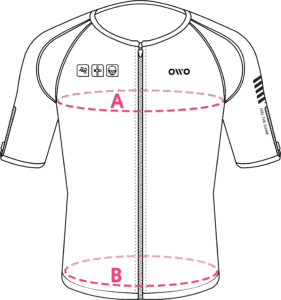
Measure your chest (A) and hips (B) following our indications.
The reference measurement will always be the larger of the two (A or B).
Look in the chart to which size corresponds to that measurement.
| Size | Reference measurements | |
|---|---|---|
| Inches | Centimeters | |
| 2XS | 25.6 – 29.4 | 65 – 74 |
| XS | 29.5 – 32.6 | 75 – 82 |
| S | 32.7 – 36.1 | 83 – 91 |
| M | 36.2 – 39.7 | 92 – 100 |
| L | 39.8 – 42.8 | 101 – 108 |
| XL | 42.9 – 46.3 | 109 – 117 |
| 2XL | 46.4 – 49.9 | 118 – 126 |
| 3XL | 50 – 53 | 127 – 134 |
| 4XL | 53.1 – 55.9 | 135 – 142 |